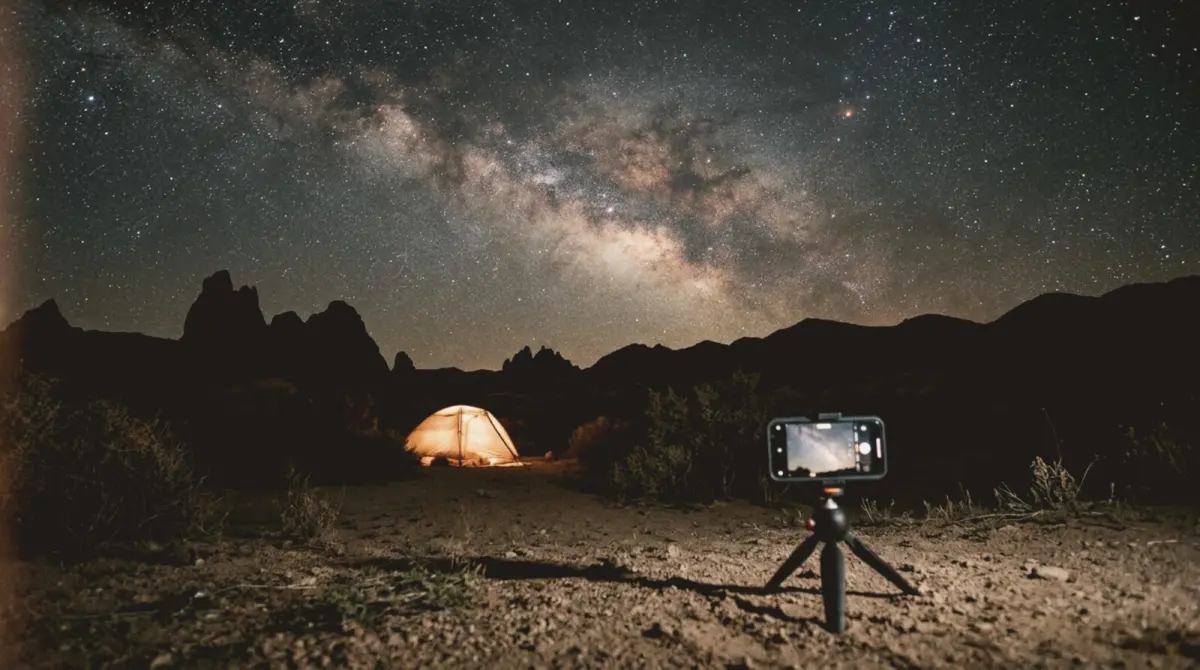
Telling a story through a single frame
Layered foregrounds, a clear subject, and a hint of context — build images that speak.


Telling a story through a single frame means giving one photo everything the viewer needs to imagine what is happening: a subject, a setting, and a hint of before or after. You do it with composition, not captions. Layer the scene from near to far, give the subject a clear action or emotion, and include one detail that raises a question.
The three ingredients of a single-frame story
- A subject. One person, animal or object the eye lands on first.
- A setting. Where it happens. The place gives the subject meaning: a child at a bus stop reads differently from a child on a beach.
- A moment. Something that implies time: an action mid-way, a glance, a gesture, a door half open, a suitcase by the door.
If one of the three is missing, the photo is a portrait, a landscape or a detail, but not a story.
Composition techniques that tell stories
- Layered foregrounds. Something near the camera, the subject in the middle, the setting behind. Each layer adds context. See layered foregrounds.
- Small subject, big world. A small figure in a large scene tells a story about scale, solitude or adventure. slay's Travel Shot guide frames it.
- Off-centre placement. Put the subject on a third and leave space in the direction they are looking or moving; the empty space is where the story goes.
- Juxtaposition. Two elements that contrast: old and new, big and small, calm and busy.
- Frame within a frame. A doorway or window makes the viewer feel like they are watching a scene unfold. See frame within a frame.
- Leading lines. Roads and paths suggest a journey.
Single-frame story examples
- A runner tying their shoes at the start line before dawn.
- An empty chair with a coat still on it and a coffee steaming.
- Two people walking away on a beach, one carrying shoes.
- A child pressed against a window watching rain.
- Hands passing a key across a table.
- A lone cyclist on a mountain road under a huge sky.
How to shoot story photos on iPhone
- Look for the moment before or after. The second before a jump, the moment after a hug. Shoot bursts (swipe the shutter button left and hold).
- Include the setting. Step back or use 1x or 0.5x to show where you are.
- Simplify. Remove anything that does not help the story.
- Use light for mood. Golden hour feels warm and nostalgic, blue hour lonely, overcast quiet.
- Be patient. Find the setting, compose, then wait for the subject to walk into it.
Frame your story
slay overlays composition guides on your live iPhone camera, so the subject, setting and space land where the story needs them.
Get slay on the App Store: https://apps.apple.com/app/id6807513456?utm_source=slaycamera&utm_medium=article&utm_campaign=tell-a-story-single-frame
Questions about this article
Quick answers from the article. Ask anything else below — the assistant answers from the app's docs.
Frame it perfectly, every time.
Free to download. Slay Pro from $1.99/week unlocks every guide, LUT and lesson.
Download the App